
Nature's medicine
As a Kanien'keha:ka (Mohawk) woman, my connection to my culture and my community is as important to me as the water I drink and the air I breathe. I find my Indigenous roots in nature, where my identity is as deep in the land as the roots in the...
Wetlands in the Frontenac Arch
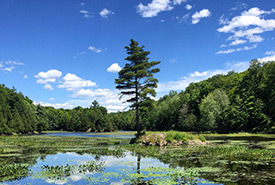
A wetland in the Frontenac Arch, ON (Photo by NCC)
Late last autumn, I was travelling with a friend through the Frontenac Arch. For me, this is a daily occurrence, but I sometimes forget that other people don’t see forests, lakes and wetlands on their morning commutes. It’s always a...
Installing a pond leveller for beavers
It was a crisp October morning and a thin layer of ice covered the surface of the wetlands as we drove out to the Kallal property. This site, located 40 minutes east of Edmonton in the Beaver Hills, was purchased by the Nature Conservancy of...
Pikas and their islands in the Rockies
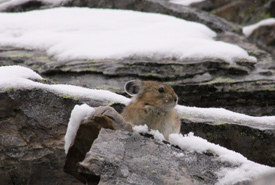
American pika (Photo by Allison Haskell)
What’s your favourite animal? It’s a common question for many of us with a fascination for wildlife and a passion for conserving the natural world around us. When I answer that my favourite species is American pika, some people are...
Measuring what matters: Biocapacity and ecological footprint
The most-used measure of a country’s progress is its gross domestic product (GDP) — the value of the goods and services produced over a period of time, such as a year. A huge drawback of GDP, however, is that it does not fully reflect...
Antlers of the East: Tracking the decline of the Atlantic-Gaspésie caribou (part one)
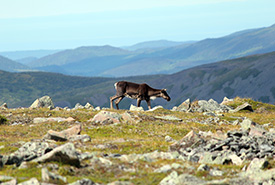
Woodland caribou at the summit of Mont Jacques-Cartier, tallest among the Chic Choc Mountains of Gaspésie National Park, QC. (Photo by Zack Metcalfe)
It was August 18, 2017, when I gained the summit of Mont Jacques-Cartier, an alpine peak of shattered stone and meagre vegetation some 1,270 metres above Quebec’s Gaspé Peninsula. Several stones were organized into mounds, marking the...
Carbon and wetlands: So what's the big deal?
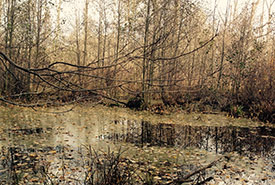
Wetlands can support lots of plants and vegetation. (Photo by Amanda Loder)
Wetlands can support a lot of plants and vegetation, which take up carbon from the atmosphere. What's unique about wetlands is that they enable dead plant material and the carbon they contain to be buried in their soils without being released into...
A world without wetlands
I live next to a swamp. After 20 years of having this swamp as my neighbour, it’s kind of grown on me. I enjoy the spring flush of marsh marigolds, the annual reawakening of spring peepers, and I still smile when I see a colourful wood duck...
Climate change, fire and their implications for species
The role of fire in forest ecosystems Forest fires are powerful and devastating. But they are also necessary for the rejuvenation of some ecosystems. Many plants are well adapted to fire. Some trees have dense bark or shed their lower limbs to...
Winter on the wet West Coast
When you picture winter, images of dripping mosses, lichens and ferns along with long, diffused yellow light rays dappling a lush vibrant green forest floor, combined with the playful cries of the bald eagle, may not be what come to mind. However,...
