
The ants that herd aphids
On July 21, 2021, I was carrying out annual conservation monitoring at the Old Man on His Back Prairie and Heritage Conservation Area (OMB), when I came across an unusual sight: much of the silver sagebrush that covers the property was covered...
The best free nature apps
Some nature lovers may find technology and the natural world at odds. How can you enjoy tranquility with the ping of your smartphone? While nature may be a refuge to unplug, I would like to present an alternative view. Apps and the technology that...
Learning new things in familiar places
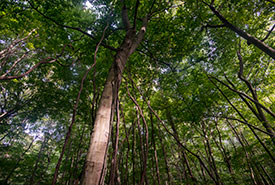
Forest canopy in Backus Woods, ON (Photo by Neil Ever Osborne)
To most people, warmer weather means soaking up the sun at the beach, making a northern weekend getaway to a picturesque cottage, or spending time with friends and family around the campfire or barbeque. While this applies to those of us in the...
World Habitat Day 2021: There is no protected habitat too small to benefit biodiversity
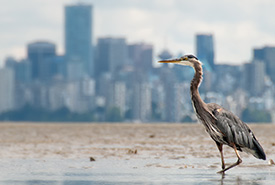
Great blue heron with a cityscape in the background (Photo by iStock)
October 4 is World Habitat Day, which has been celebrated annually by the United Nations since 1986. This year’s theme is accelerating urban climate action. The day is followed by Urban October, a month where we are encouraged to reflect on...
Mouse-ear hawkweed: Friend or foe?
A species is considered invasive or alien when it is located outside its natural distribution and threatens humans and/or the environment. There aren’t a lot of clear answers about the impact of certain invasive species and the problem is...
What’s that stuff on my tree? A guide to Manitoba’s lichens
If you’re an observant person, you may have noticed colourful things growing on Manitoba’s trees and rocks. Although some of these organisms are mosses (especially near the base), they are more likely to be lichens. Bright orange...
Discoveries in little-known fungi: Adventures in looking at lichens
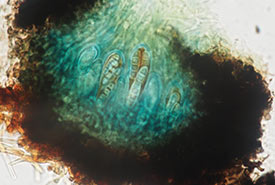
Opegrapha parmeliiperda, cross section of one fruiting body showing four-celled spores developing inside spore sacs; blue colour result of treatment with potassium hydroxide followed by Lugol’s iodine solution. (Photo courtesy of Kendra Driscoll)
I used to think that scientists understood the basics about most living things on Earth, that new species were all discovered long ago by people like Linnaeus and Darwin. Maybe you could find new species in the most remote corners of the planet,...
A case of mistaken identity: Goldenrod and ragweed
I count myself fortunate when the change of seasons doesn’t bring about a runny nose, itchy eyes, headache and coughing, among other symptoms brought about by pollen (a fine powder produced by plants for sexual reproduction). Some pollen is...
An introduction to Ontario's snakes
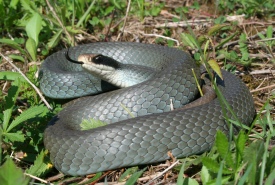
Blue racer (Photo by Joe Crowley)
Here in Ontario, the most common snake I’ve come across is eastern gartersnake, quite often in my own backyard. Around two weeks ago, I went hiking with a friend and saw two small gartersnakes slither near the trail. While my friend...
Cockroaches and colours: Exercises in attention on Pelee Island
On one of my first days working for the Nature Conservancy of Canada as conservation intern on Pelee Island, a cockroach had nestled itself into my copy of Mary Oliver’s collection of poems, Devotions. As a lifelong urbanite, my instinct was...
